Glider Content

Pages

Kamis, 20 Mei 2010

Indonesian Batik-batik quality china

Indonesian Batik-batik quality china

Less is more nearly 1.5 years ago has entered the home of batik chinese batik with the aim to emulate our culture is precisely pekalongan. With a cheaper price even a little different style n more prominent who have been shocking the artists in the city, the artists in the city pekalongan finally compare the quality of one another, apparently the result of our culture batik quality is much better with the original manufacture of the power traditionally seniority experts.
The government also contribute MLP setempatpun save our culture by checking all kinds of Chinese origin who was batik address is illegal, then they must be pocketed in addition akn kualits shame our culture n they also have to deal dg parties who authorities.

Batik Tulis Pakandangan

Batik Tulis Pakandangan

Devoted to maintain quality
for everyone
Slideshow
Visiting Sumenep, less afdol taste if not brought home by a district-by batik typical of this eastern end of Madura. Madura typical motifs and colors. Unchanged since the 19th century. motif is around buruung, flowers and plants. The starting point batik Sumenep Pakandangan born in the village, about 25 km south City Sumenep.

1960s, when the government lowered the value of currency USD. 1000.00 to Rp. 1.00, from the village of batik products Pakandangan fallen sharply. Only after the 1980s the local batik began to get the attention of the government through Industry Kandeps that time. Then there was a village built Pakandangan. Improvement and repair batik motifs were carried out. Now about the motives and colors can follow the market taste. However, not to eliminate her hallmark Madura.

Happenings staining fabric, initially using only natural dyes from boiled bark, leaves and coloring materials from plants, so the process is quite long. When the synthetic dyes appeared, the batik began to find bright spots. However, they need to Pamekasan to buy food color so it. As narrated by Ahmad Zaini (45), owner of the showroom bati writes "Melati Jokotole" Pakandangan.

Government's attention did not stop, in the year 1996 sent back Kandeps Industry batik Sumenep to Jogjakarta to follow the dye batik workshop. After returning from Jogja, batik Pakandangan never troubled again with staining. Now, about 70 batik still survive. This amount has shrunk compared to before the monetary crisis in 1998, approximately 200 batik. Pakandangan village who did not belong minus, its citizens did not just rely on batik livelihoods, but also tobacco, seaweed, herbs and chilli.

Batik work is relatively good wages. Ranged from Rp. 50 thousand to USD. 75 thousand per piece. Depending on the [existing type and quality of the fabric. Typically, a piece of cloth (4 x 1.2 meters) completed work on it in three days. selling prices were mixed. Depending on the type and quality of fabric. Prima types such as now IDR. 50 thousand per piece and the type Primisima USD. 200 thousand per piece. While batik silk type ATM (machine loom) is sold at Rp. 225 thousand - Rp. 350 thousand per piece, made from silk and batik ATBM (not the engine loom USD. 600 thousand per piece.

Achievements as well as proof of quality batik Pakandangan engraved in 1991, when PT Garam Sumenep ordering 1300 pieces of batik for employee uniforms. Starting from the cooperation that the company finally became a foster father to the batik in the Village Pakandangan. Year 1993 PT. Salt as a foster father initiated the training of silk batik. "That was the beginning we could batik silk," said Zaini. In addition to PT. Salt, Jasa Marga, the Office of Cooperative and PKM, Office of Industry and Commerce also played a role fostering local batik.

Coaching is done more in training and study visits to the centers of batik in other areas. In 2003, the Department of Cooperatives and PKM Sumenep give kesepatan on the batik batik shirts to deepen their skills. "We tell them to Tuban, to gain knowledge of batik shirts," said the Head of Department of Cooperatives and PKM, Ir. Salimin Wahdin Saad, MM.

Promotion was done through the exhibition events both locally, to national level, even international. Year 2000 Pakandangan batik had docked in Germany in a cultural exhibition. End of April 2004 following the re Pakandangan batik National Culture Exhibition in Jakarta. Impact, many barely marketing difficulties. In fact, since 1991 the batik no longer have to bother looking for the consumer. The reason, many consumers who have come alone to the village, including among local and foreign tourists. To maintain quality, technology or stamp printed batik is not done, although there is an order in large quantities. Not because you can not, but solely for the sake of loyalty to maintain the quality of typical Madurese batik.
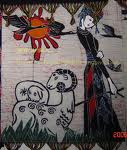
Textile Fabrics and batik Batik

Textile Fabrics and batik Batik

Batik is an Indonesian cultural heritage, in general, Indonesian people already know about it, but how to differentiate between batik and batik textiles in general the people of Indonesia or batik are still many consumers who do not understand. Often consumers are proud to wear batik, batik due to buying in stores that have been quite popular, the price is quite expensive but is not actually acquired but batik cloth batik textile fabric, or better known as silk screening fabric (print).

Batik general definition which has been agreed at the time the convention Internaional Batik in Yogyakarta in 1997, is the process of writing a picture or decorative candles on any media Using batik (wax) as a tool of the color barrier. When the process without using the batik wax can not be called batik, batik textiles and says.

When viewed from the side of functionality and usability, batik cloth batik textile or no difference, nor when viewed from the side of the economy both part of the business that is very promising and can be profitable for the whole community. The price of batik, which is relatively more expensive then the original by itself bagisebagian low economic level of society that will not be affordable to buy batik cloth. So with much circulation of batik textile fabric, for the lower middle masyarakatkelas finally able to wear batik.

The problem is for the consumer who has paid a price that he gets quite expensive but not the original batik cloth, batik textiles but just.

Government through the Ministry of Industry has proposed the "Batik Mark" is in the form of signs or labels that differ in quality based on the process of making batik. These signs include the quality of batik, batik and batik stamp stationery and combination. Original purpose is that consumers will not feel cheated by looking at the sign that was stuck on the batik cloth, and profits for the manufacturer or seller can to increase the selling price according to the quality offered. But until recently by the producers and traders can not execute batik cloth batik Mark labeling is due to the process of obtaining these labels need to take care of the cost and time.

To find the difference between the batik and batik textiles are there tips that can help choosing batik cloth as follows:

1. Batik Fabrics

1.Pada commonly used base material is made from natural fibers or cellulose fibers or fiber produced from animals. Type of batik cloth that is used in general such as cotton, rayon fabrics, ramie and silk fabrics. The process of batik can not use this type of fabric made from polyester material.

2.Gambar on batik cloth is usually some will penetrate through to the back of the fabric. Moreover for this type of fine batik cloth, then pelilinannya workmanship will be performed on both the face fabric. Special on batik cloth production techniques, using the cold wax stencil techniques pictures almost did not penetrate at all, different from the one using hot wax techniques then it will penetrate down to the back of the cloth.

3.Bau batik fabrics will smell the candles. To know the scent of this candle, usually by consumers batik cloth is brought near to the sense of smell. In fact, nobody ever said that if the smell could be reminiscent of batik cloth affection her parents who had picked him up when the baby fabric batik shawl. There are also saying if you already smell the batik cloths can relieve stress.

4.Detail pictures on batik cloth is relatively simple when compared with batik textile. Especially for the detailed pictures with a small size with a darker color will be very difficult to find on batik cloth. This is due to limitations in the process of pelilinannya.

5.Harga batik cloth is relatively more expensive and limited.

6.Bentuk ornament or ornament on a piece of batik cloth sometimes there is no exact similarity between the motifs with each other, though the process of batik cloth is made with batik techniques. Moreover, the existing form of the motif on one sheet of batik cloth from one to another big possibility there must be differences.

Batik 7.Kain we rarely encounter in the form of packaging rolls. Usually packaged in the form of batik cloth folded or wrapped individually or sets.

1. Batik textiles (Silk Screen or Print)

1.Pada general basic materials used are made of polyester fibers, although there are also made of cotton, rayon fabrics, hemp cloth and silk as well as on batik cloth.

2.Gambar padakain batik textiles (silk screening) usually will not penetrate through to the back of the fabric.

3.Kain stencil does not smell of wax and almost no aroma whatsoever.

4.Detail screen printing images on fabric is relatively more smooth and more complete when compared with batik cloth. In batik textile fabric (silk screening) detail drawing more could achieve a small size with color-a darker color can be obtained, different from batik cloth. This is because the ability to screen printing process, the better and more advanced technology. Own silk screening process many kinds of them are hand silk-screening techniques (hand printing), using a plate and a rotary system that is by printing technique using a rotating cylinder. Each technique has advantages and disadvantages of each are associated with image size and quality of detail motive.

5.Harga silk screening fabric is relatively cheaper, and more generally the product quantity is taken so many things cost to make the film / plate or making a stencil screen can be covered (break event point), because the cost of making movies is expensive, so if it produces less so with its price will be as expensive fabric batik cloth.

6.Bentuk decorative ornament on the piece of cloth or silk screening will almost certainly many similarities between the motives and accurately with one another.

7.Kain stencil can we meet in the form of rolls. Usually within a roll could reach more than 100 meters in length.

In the end, both the use of batik cloth or clothing which uses clothing or textiles batik prints that surely we all love Indonesian batik. And not how much longer this year Indonesia will get award from UNESCO that batik is a culture of Indonesia after the recognition of the kris and wayang kulit has received an award from UNESCO's first.

Selasa, 18 Mei 2010

Batik and Spread of Islam

Batik and Spread of Islam

The spread of batik art did not escape the influence of the spread of Islam in this country. History of batik in other areas of East Java is in Ponorogo, whose story is related to the spreading of Islamic teachings in this area. History of Batik. Mentioned problem area Ponorogo batik art are closely related to the development of Islamic religion and the kingdoms first. It is said Batoro Katong area, there is a direct descendant of the Majapahit empire named Raden Raden Patah sister of Katong. Katong Batoro this is what brought Islam to the existing ruins Ponorogo and now is a mosque Patihan Wetan area.

Selanjutanya developments, in Ponorogo, Tegalsari area there is a boarding school that nurtured Kyai Hasan Basri or known as the Great Tegalsari Kyai. This Tegalsari pesantren teach religion other than Islam also teaches administrative sciences, sciences and literature of war. A disciple of the famous from the literary field is Tegalsari Ronggowarsito Raden. Kyai Hasan Basri was taken into law by the king Kraton of Solo.

Batik art at that time was limited within the palace. Therefore, Kraton Solo daughter became the wife of Kyai Hasan Basri Tegalsari and then brought into-accompaniment followed by a retinue. besides many royal family dipesantren Solo learn this. These events bring art out of the palace bafik toward Ponorogo. Young people educated in this Tegalsari when it came out, the community would donate his batik dharma in areas kepamongan and religion.

Long batik areas that we can see now is a region that is Kepatihan Wetan Kauman now and from here extends to the villages Ronowijoyo, Mangunsuman, Kertosari, Setono, Cokromenggalan, Duchy, Nologaten, Bangunsari, Cekok, Banyudono and Ngunut. It was the drugs used in the batik is made in our own country from woody among others; tom tree, noni, high wood. While homemade kainputihnyajugamemakai materials from woven carrying. Bam imported white cloth known in Indonesia about the late-19th century.

Batik-making in the new Ponorogo known after the first world war brought on by a Chinaman named Kwee Seng from Banyumas. Ponorogo region early 20th century in the famous batik indigo dye that does not fade and that's why entrepreneurs Banyumas and Solo batik from giving jobs to many entrepreneurs in Ponorogo batik. As a result of the familiar printed batik production petama Ponorogo after World War until the outbreak of the second world war that is famous for his rough batik batik blue mori. Market batik rough Ponorogo then famous throughout Indonesia.

Senin, 17 Mei 2010

Hundreds of Japanese Youth Charmed Ala Harajuku Batik Exhibition

Hundreds of Japanese Youth Charmed Ala Harajuku Batik Exhibition

. Clamorous applause accompanied by hip-hop beat to witness the richness of batik fashion show fashionable Harajuku (Japanese young contemporary fashion) which was attended by about 200 Japanese young people packed a nightclub in the Roppongi area, Tokyo, Saturday night.


A total of 44 collections from fashion designers Tiarma Sirait displayed by dozens of beautiful and slim models from Japan, as part of the commemoration of 50 years the friendly relations of Indonesia - Japan.

Every time a model appeared on the catwalk, click amazed and visitors gaze never leaving lenggak-swing movement of the model was wearing a batik night with conspicuous color patterns combined with each other batik "colliding".

"Heeee, sugoi (great, red)," comments a young Japanese girl after watching a performance which was also attended by the diplomats, journalists and also a number of young Japanese businessman.

"I was deliberately making batik clothing for the youth of Japan, among which are easily to be attracted with something new," said Tiarma Sirait told Antara after performances.

Tiarma had just received a prestigious award from the Olympic Fine Art paintings are so interested in batik fashion exhibition that targets young people in Japan. Once got an offer from Javarism, the committee to hold the event, he simply states agree.

"Introducing Indonesia at this time would require a more creative way. Batik can be the beginning of Harajuku style will Indonesian introduction of an acceptable way Japanese youth," said Tiarma who also bring as many as 200 works to be sold on the night.

According to her batik was already well known in Japan, but has not become a fashion choice, even though the potential of batik to become the world's most extraordinary fashion. Tokyo, as one part of the fashion trends the world is a place that needs to be selected as a venue for performances of batik in order to have reverberations that are also global.

Meanwhile, Mr Jusuf Anwar said that the show "Harjutik" or combination of styles and batik Harajuku is a young Indonesian children the courage to display their creative work overseas.

"Introducing Indonesia is not always through formal occasions, but the art of fashion show could also become a means of diplomacy is good to introduce Indonesia differently," said former finance minister's.

BCL wear batik

BCL wear batik

Status as a wife apparently did not make Bunga Citra Lestari become rigid in their dress. Shown in Indonesia Kids' Choice Awards 2009 at the Tennis Indoor Senayan, Jakarta, Unge, greeting familiar flowers, looks' funky 'batik-print shorts with a top open at the back and shoes sneakers. Her hair was arranged with the models 'harajuku' typical young Japanese.

"This dress was deliberately designed to let in accordance with children's events, let me funny. The design is really because there are no Indonesian batik-batik wear any shoes, sneakers,"

As a result, Unge dressed like that looked like a teenage boy. "Emang dress like this let ngebohongin age, so like a kid again. It was first time I was a teenager I also like to wear like this," he said.

Exist without the companionship of the husband, Ashraf Sinclair, Unge said that he was very concerned at the fact that children under the age proved to be more like romance-themed songs.
"Yes, it is very worrying. But if virtually nobody actually does exist, because it is less exposed aja same media," he said.

Then, if she is not interested in creating songs for children? "Maybe not yet, but indeed most of the songs I also love kids. Maybe later made a song for my son it," he concluded.

Indonesian Batik Become World Heritage

Indonesian Batik Become World Heritage

. VIVAnews - Indonesian Batik is identical with, but that does not mean other countries can not produce it. Our neighboring countries like Malaysia, Singapore, even China is also producing batik with quite diverse motives. It did not make the international recognition associated faded batik Indonesia.

For proof, UNESCO (United Nations Educational, Scientific and Cultural Organization), will reinforce Indonesian batik as a World Cultural Heritage (World Heritage). The official inauguration will be done on 2 October 2009 in France.

For this type of batik, which will be confirmed as a World Heritage is rather batik batik printing. That's because the type of batik printing are also produced in several other countries. Batik was only produced in Indonesia.

Making which is done manually using the canting as well as the coloring process that takes a long time, making hues of quality handmade batik is very special. The price is also higher compared with that in print or batik printing. To make a batik also requires special skills because of the difficulty of making high enough.

For this type of batik patterns, there are also some which cater only to the kingdom in Java and can not be made by people carelessly. This was related to the philosophy and the social status of the wearer. Batik Javanese society, it is not just a patterned fabric, but also the philosophy of life and the depiction of ancestral cultural heritage that must be maintained.

To support the strengthening of Indonesian batik as a World Cultural Heritage (World Heritage), let us wear batik on October 2 next. Show our pride as a nation of Indonesia, which has a remarkable heritage of batik.